Nervous system5 min read
The brain and its lobes: who does what?
Frontal, parietal, temporal, occipital: a tour of the brain's lobes and their main functions, plus the cerebellum and the brainstem.
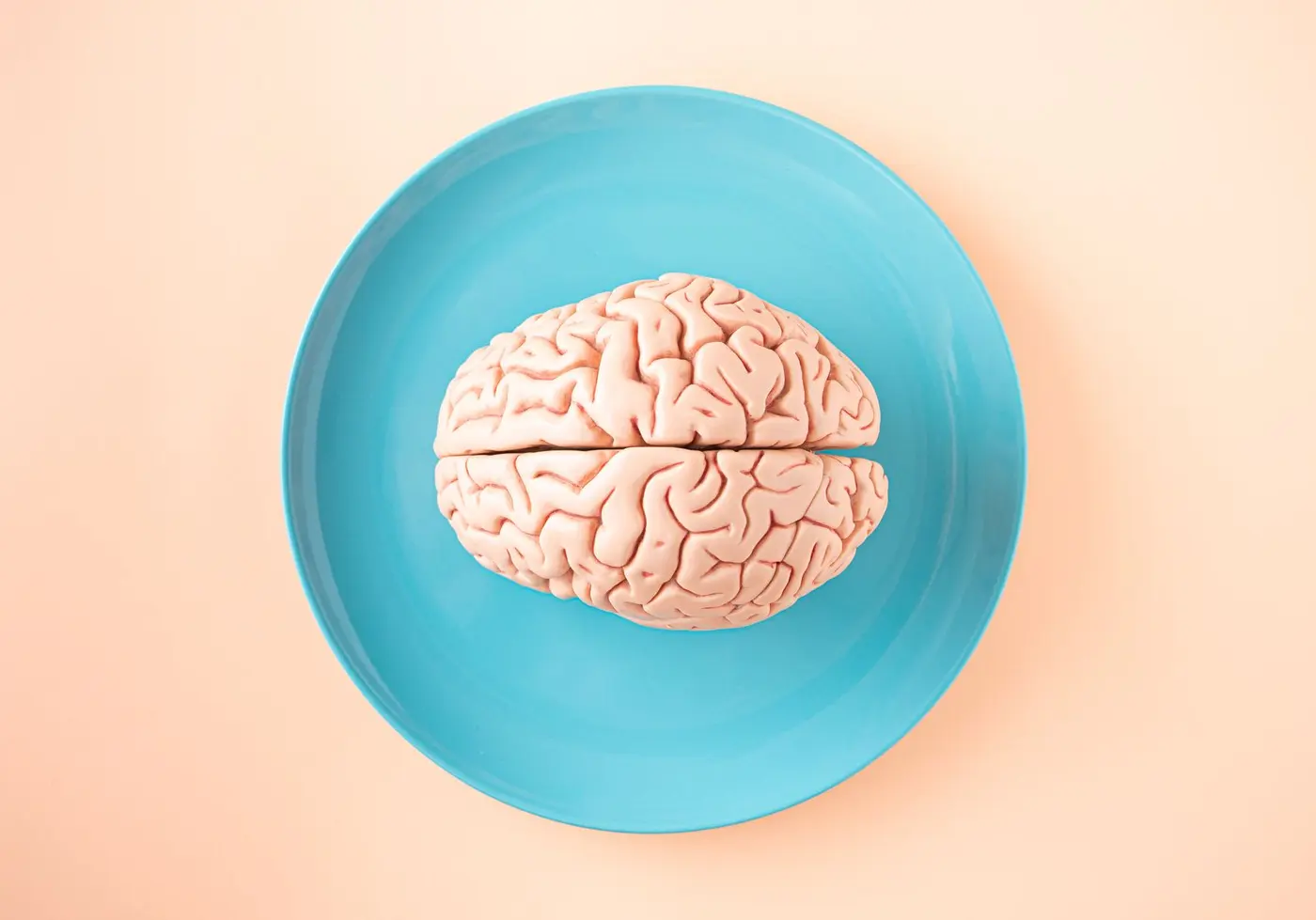
The adult brain weighs about 1.3 kg (around 3 pounds). Its largest part, the cerebrum, is made up of two hemispheres connected by the corpus callosum. Their folded surface, the cortex, is divided by deep grooves into lobes.
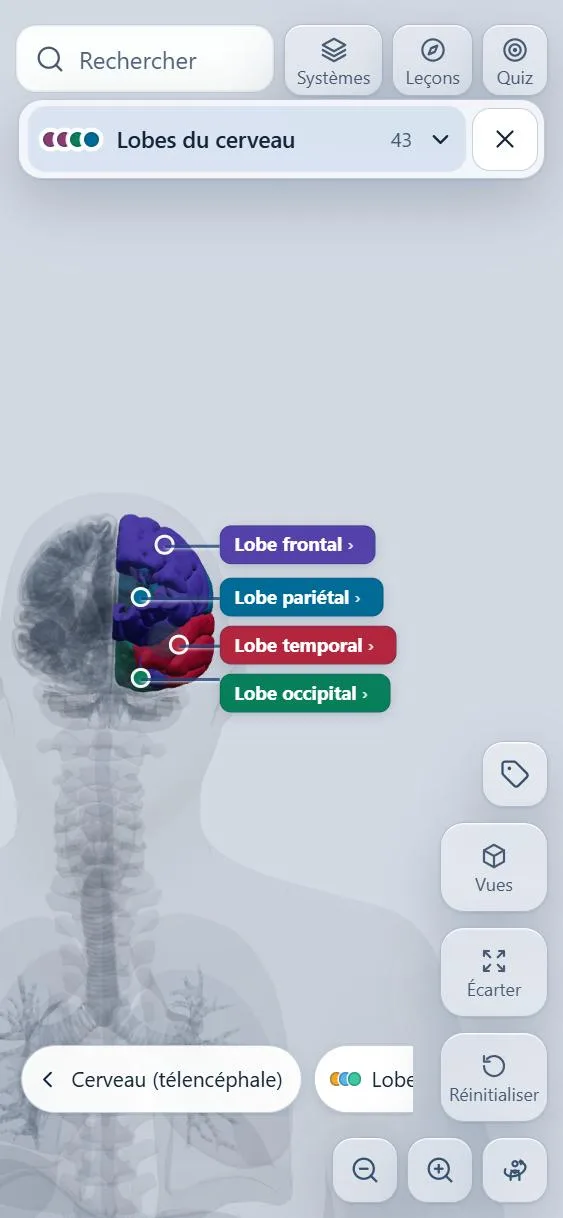
The four main lobes
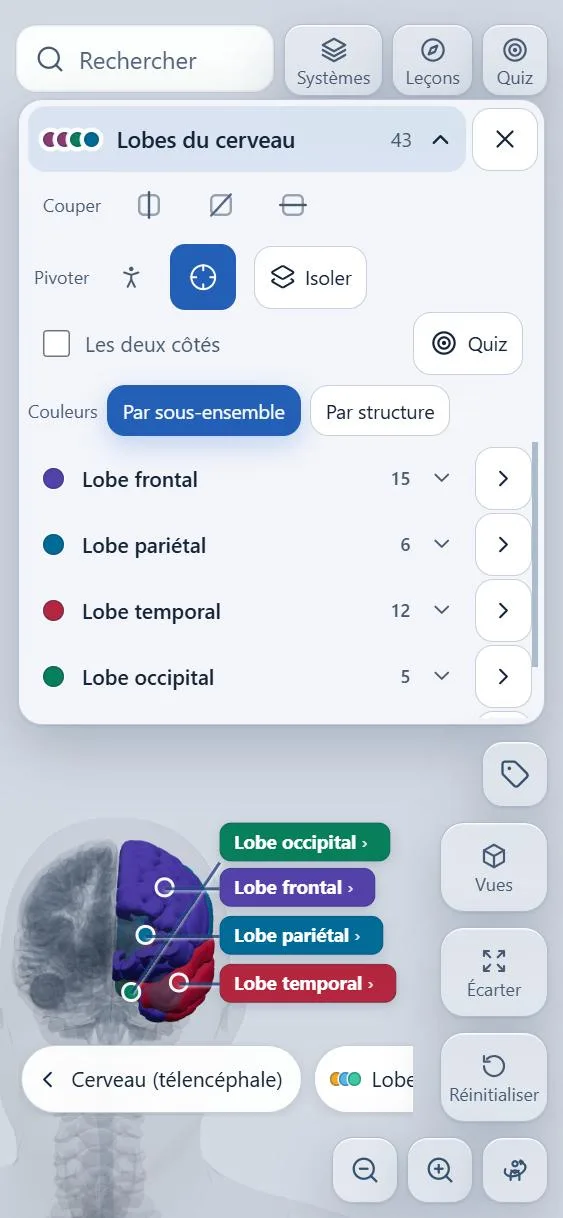
- The frontal lobe, at the front: it plans and controls movement, organizes and makes decisions. On the left side, Broca's area helps produce speech.
- The parietal lobe, at the top: it receives sensations of touch, temperature and pain, and keeps track of where your body is in space.
- The temporal lobe, on the side: it processes sounds and plays a big role in memory and in understanding language, with Wernicke's area.
- The occipital lobe, at the back: it is dedicated to vision.
These roles are tendencies, not hard borders: most tasks draw on several regions working together.
Beneath the lobes
Hidden deep inside the lateral sulcus, the insula is sometimes counted as a fifth lobe. Below the hemispheres, the cerebellum coordinates movement and balance, while the brainstem handles vital functions such as breathing and heart rate.