Lungs and breathing: how air travels through the body
From the nose to the alveoli, by way of the lobes and segments: how air gets in, where gas exchange happens and why the two lungs are not identical.
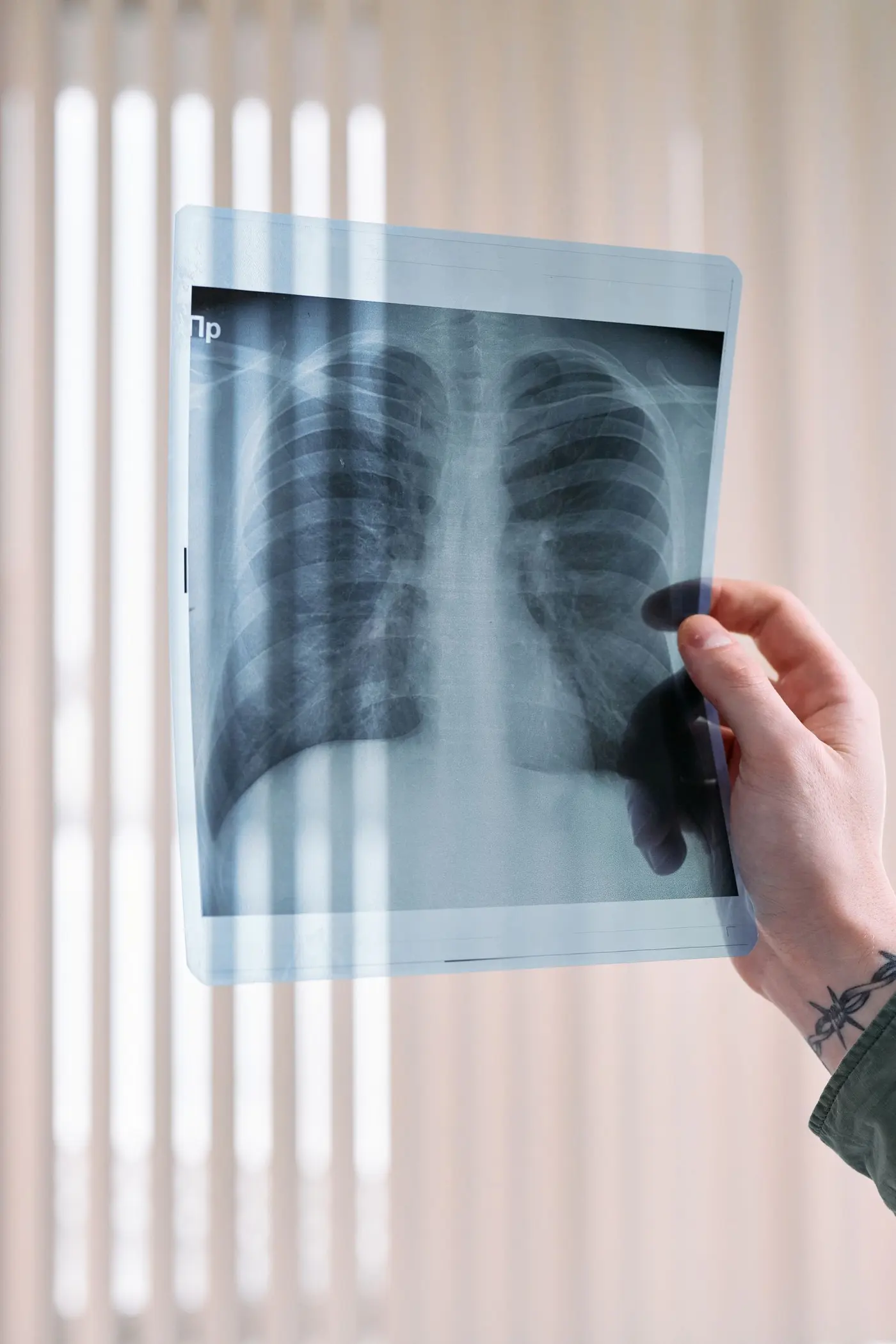
At rest, an adult breathes 12 to 20 times a minute. With each breath in, about half a liter of air travels down into the lungs, where oxygen passes into the blood and carbon dioxide leaves it.
The path of air
- 1The nose or mouth, which warm and humidify the air
- 2The pharynx, a crossroads shared with food
- 3The larynx, home to the vocal cords
- 4The trachea, a tube reinforced with rings of cartilage
- 5The bronchi, which branch again and again inside each lung
- 6The bronchioles, then the alveoli, tiny sacs where gas exchange takes place
There are several hundred million alveoli. Spread out flat, their walls would cover an area roughly the size of a tennis court: that is what makes gas exchange so efficient.
Two lungs, not quite twins
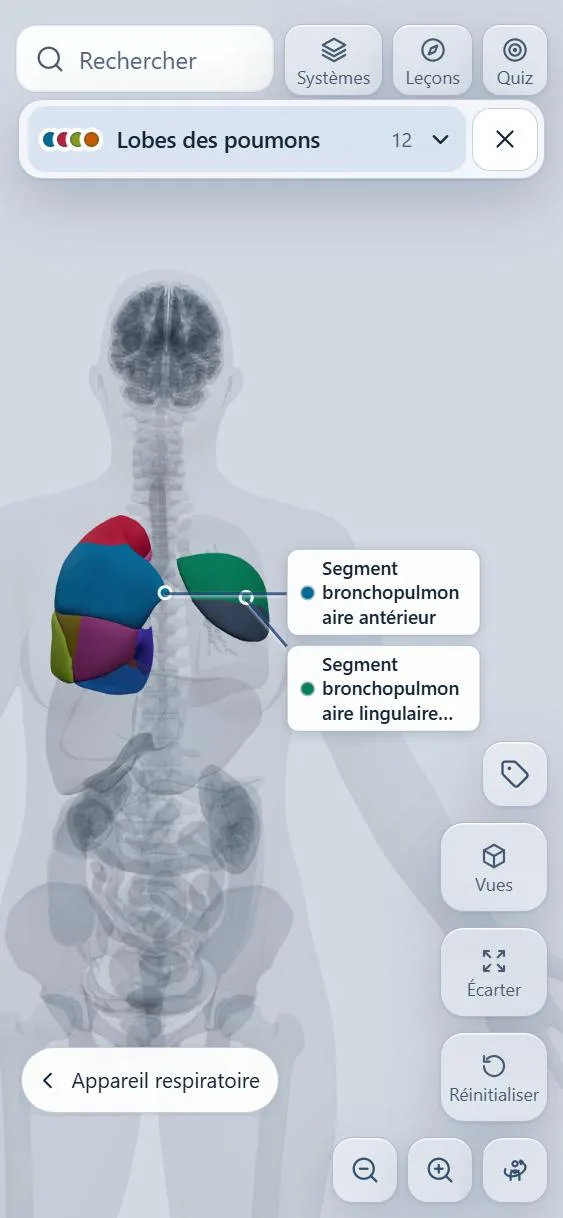
The right lung has three lobes: upper, middle and lower. The left lung has only two, because it leaves room for the heart. In place of a middle lobe, it has a small tongue-shaped projection, the lingula.
Each lobe is further divided into bronchopulmonary segments, about ten on each side. Every segment has its own bronchus and its own blood vessels, which lets surgeons remove one without touching the others.
The diaphragm, the engine of breathing
The lungs do not move on their own. The diaphragm, a dome-shaped muscle beneath the lungs, contracts and flattens: the chest cavity expands and air flows in. When it relaxes, air flows back out. During exercise, the muscles between the ribs and those of the neck pitch in to help.