The human skeleton in 3D: making sense of its 206 bones
How many bones the body has, how they are organized and how to remember them without getting lost: a complete tour of the skeleton, from skull to toes.
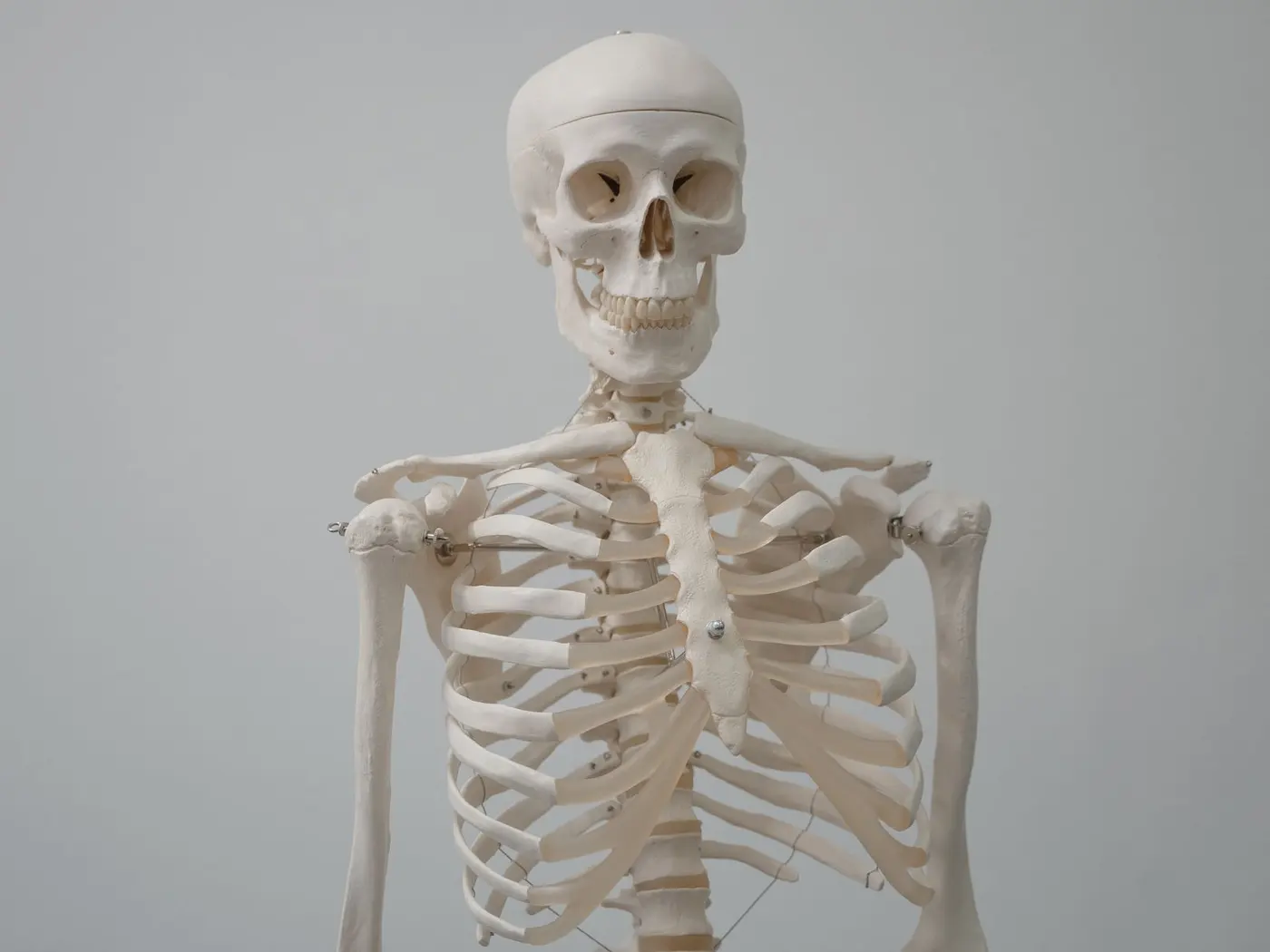
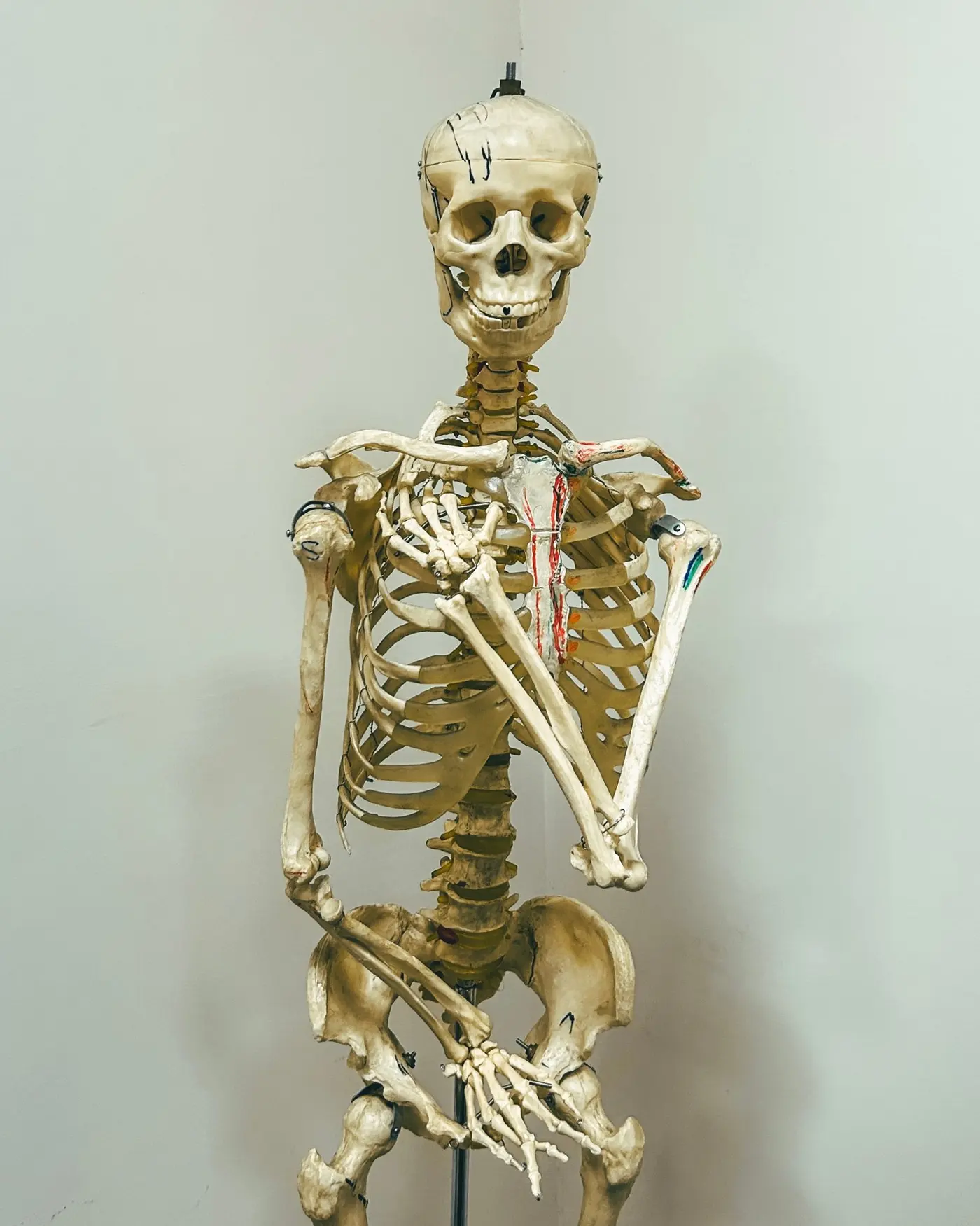
An adult skeleton usually has 206 bones. At birth there are far more, around 300: many of them fuse as you grow, like the bones of the skull or the sacrum. The number also varies slightly from person to person, sometimes with an extra rib or a small extra bone in the foot.
Rather than memorizing one long list, it is easier to see the skeleton as two big groups, then work your way down region by region.
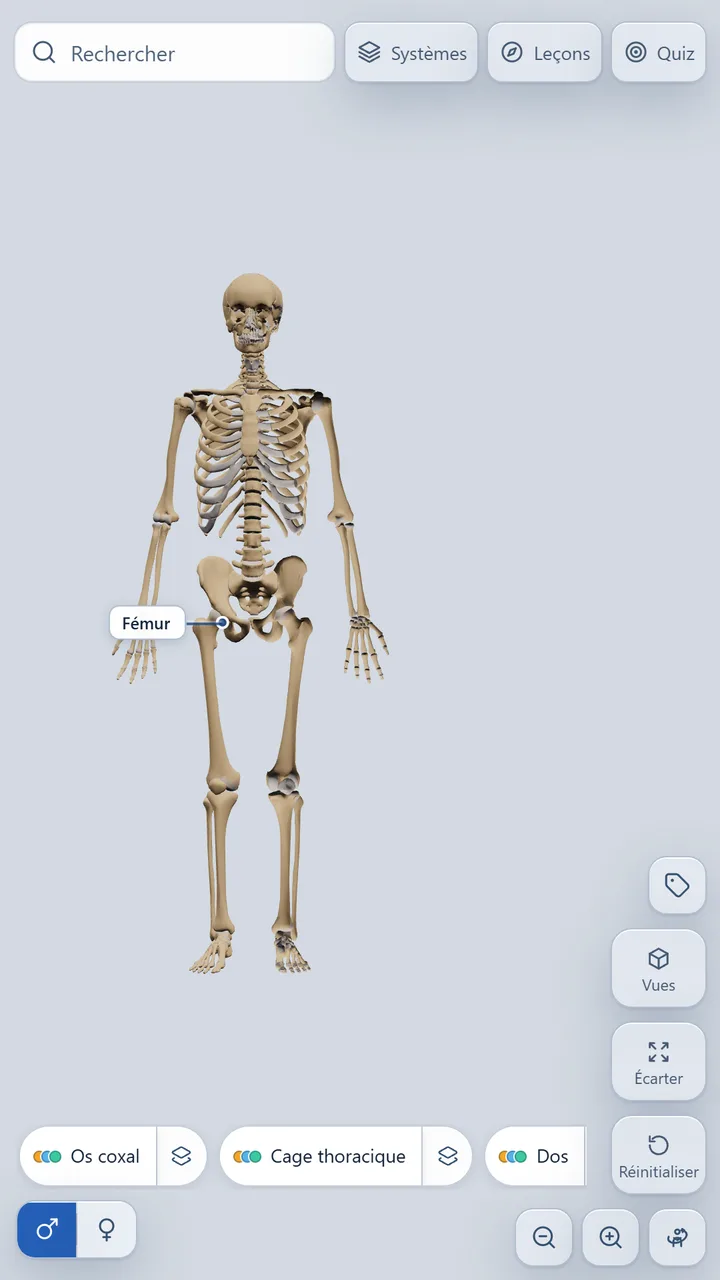
Axial skeleton and appendicular skeleton
The axial skeleton forms the central axis of the body: the skull, the spine, the ribs and the sternum. It protects the most fragile organs, the brain, the spinal cord, the heart and the lungs. It has 80 bones.
The appendicular skeleton includes the limbs and the girdles that attach them to the axis: the shoulders (clavicles and scapulae), the arms and hands, the pelvis, the legs and the feet. With its 126 bones, it is what lets you move, grab things and walk.
The skull: 22 bones that fit together
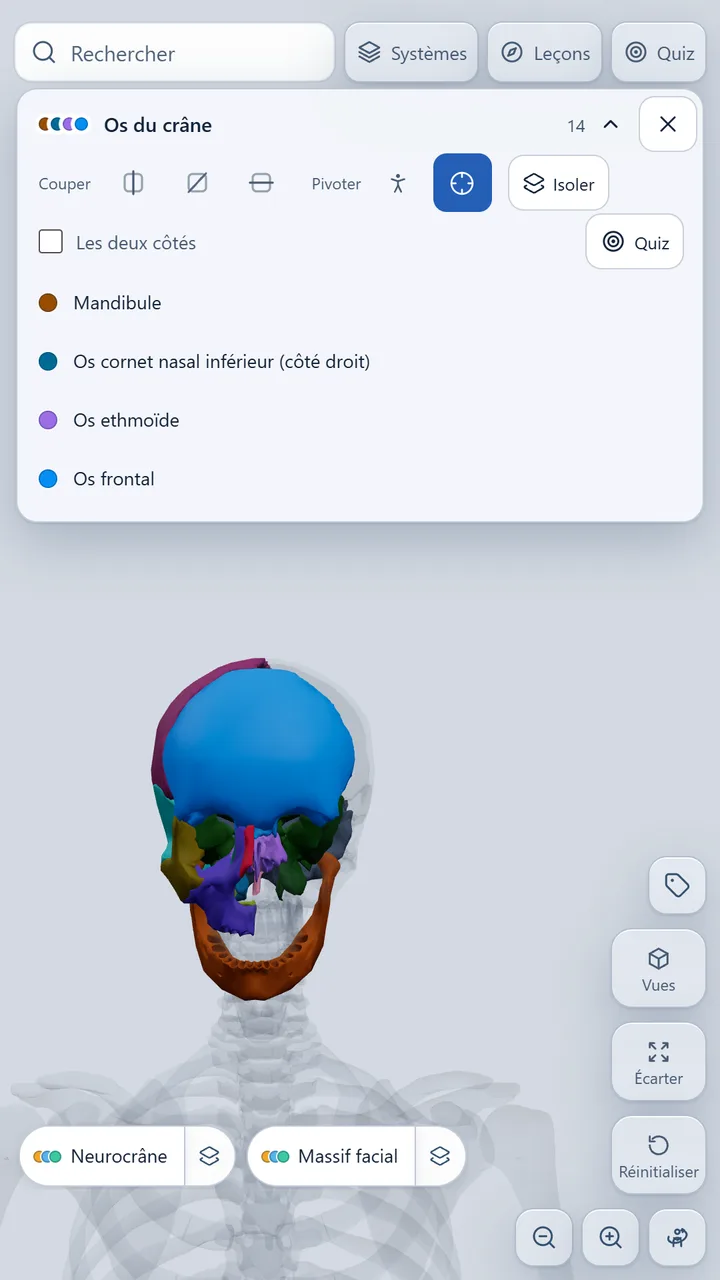
The skull brings together 8 bones that surround the brain, such as the frontal bone, the two parietal bones and the occipital bone, plus 14 facial bones, including the mandible, the only truly movable bone of the skull. The tiny ossicles of the ear are counted separately.
The spine, region by region
- 7 cervical vertebrae in the neck, including the atlas and the axis, which support the head
- 12 thoracic vertebrae, one for each pair of ribs
- 5 lumbar vertebrae, the most massive, which carry the weight of the upper body
- the sacrum, made of 5 fused vertebrae, and the coccyx, made of 3 to 5 small vertebrae
Here is an easy way to remember it: breakfast at 7, lunch at 12, dinner at 5. That gives you 7, 12 and 5.
Hands and feet, the record holders
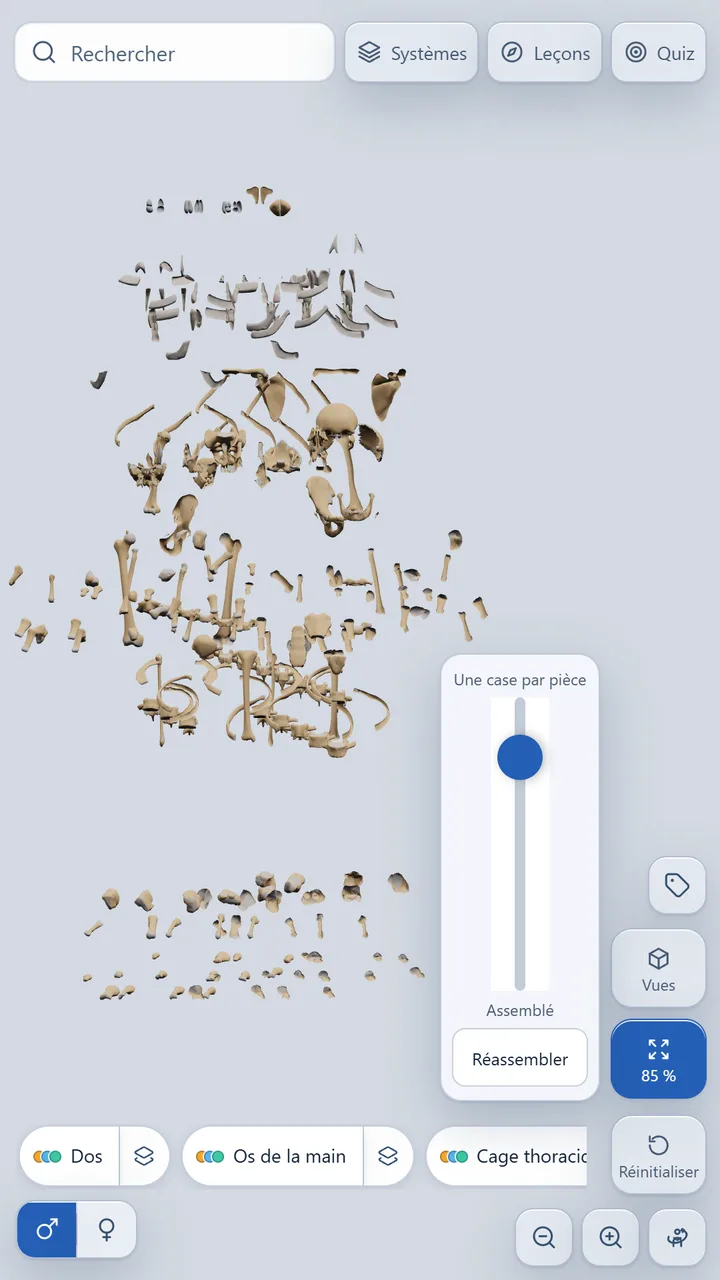
Together, the hands and feet account for more than half of the bones in the body: 27 bones per hand (8 carpal bones, 5 metacarpals and 14 phalanges) and 26 per foot. This is also where people get lost the most, which is why it helps to see them in 3D and pull them apart.
Much more than a frame
- Supporting the body and giving it its shape
- Protecting the organs: the cranium, the rib cage
- Making movement possible, with the muscles attached to it
- Producing blood cells, in the red marrow of certain bones
- Storing minerals, especially calcium and phosphorus