How to study anatomy effectively: 6 methods that work
Active recall, spaced repetition, Latin names, 3D: simple, proven methods to remember the structures of the body without spending nights copying out lists.

Anatomy is, first and foremost, a lot of names, shapes and positions to remember. Rereading your notes over and over feels like learning, but it is one of the least effective methods. Here is what works better.
1. Test yourself instead of rereading
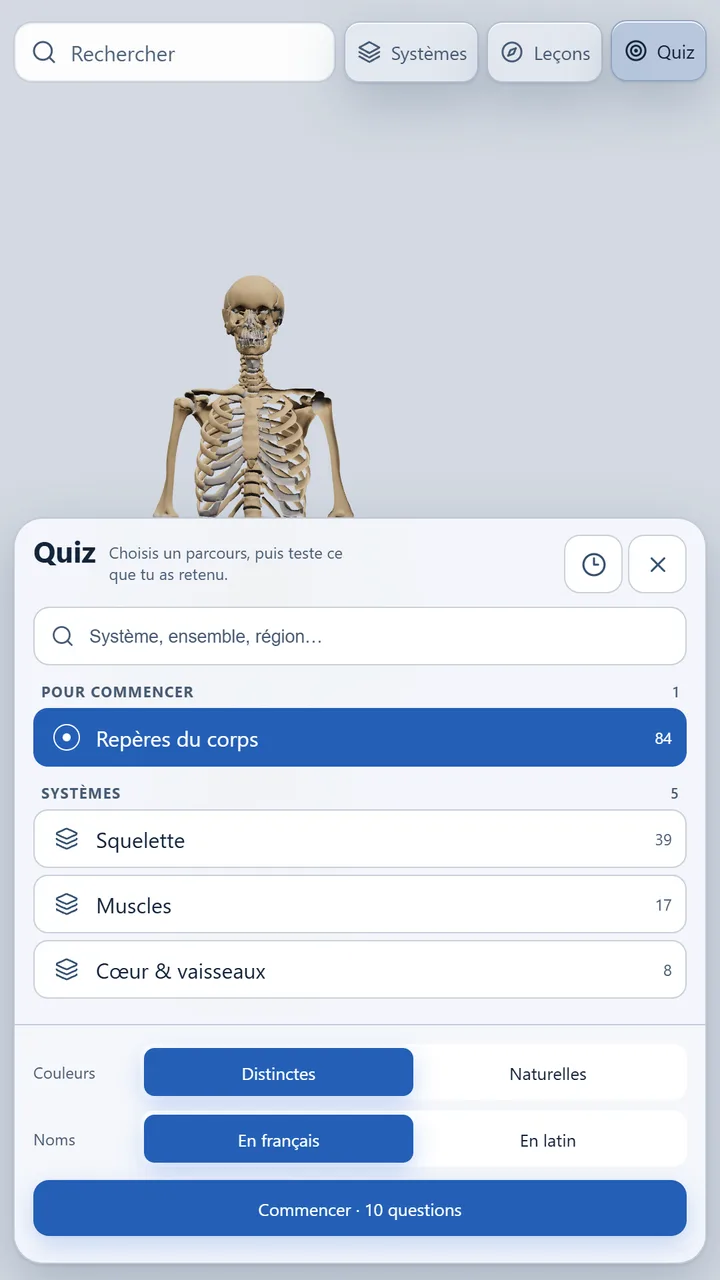
Active recall means pulling the answer from memory before you see it. That effort is what strengthens the memory. A quiz, a flashcard to flip, a structure to name off the top of your head: anything that forces you to produce the answer counts.
2. Space out your reviews
Reviewing a topic the next day, then three days later, then a week after that locks it in far better than one long session the night before the exam. Short, regular sessions, even just ten minutes, are enough.
3. See it in three dimensions
A diagram shows a structure from a single angle. Rotating the model, cutting through the body, spreading the parts apart: you understand how structures sit in relation to one another, and you find them more easily.
4. Learn by pathways and by regions
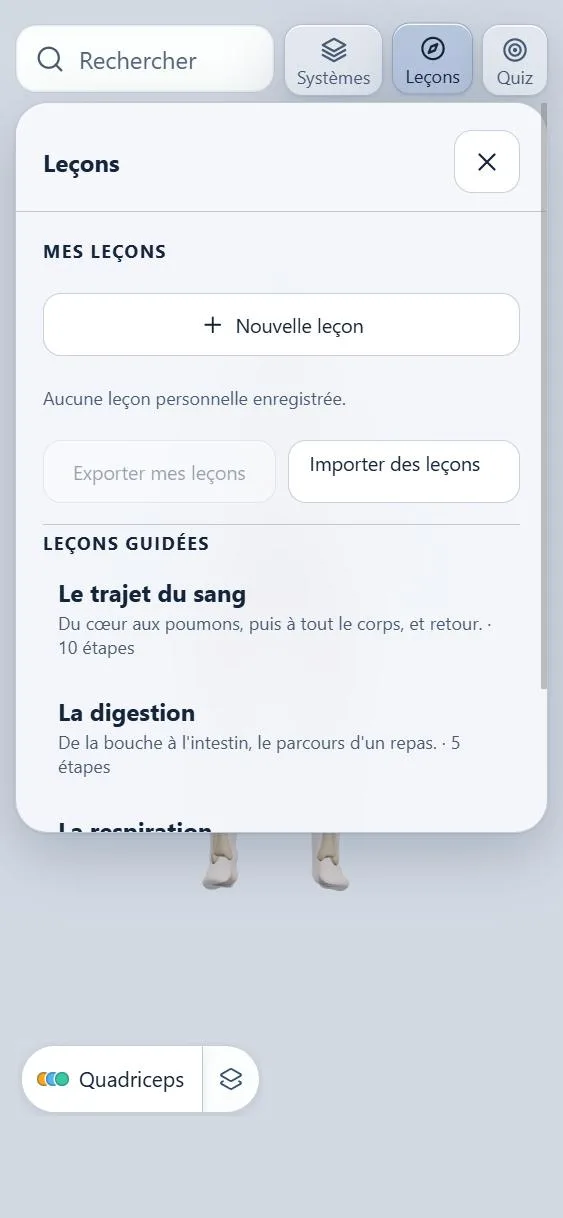
Following the path of blood, air or a meal gives you a story to remember, which is much easier than a list. Same idea for regions: the hand, then the forearm, then the arm.

5. Build your own lessons
Rewriting your course as a series of steps forces you to reorganize it. In Anatomo, just paste a passage from your course: the app spots the structures it mentions, turns them into a lesson to follow on the model, then builds a quiz tailored to it.
6. Learn the Latin names too
Latin names are shared across the entire international anatomical nomenclature, and they often explain where the English names come from: "os femoris" for the femur, "musculus biceps brachii" for the biceps of the arm. Learning them together saves you from doubling the work later on.